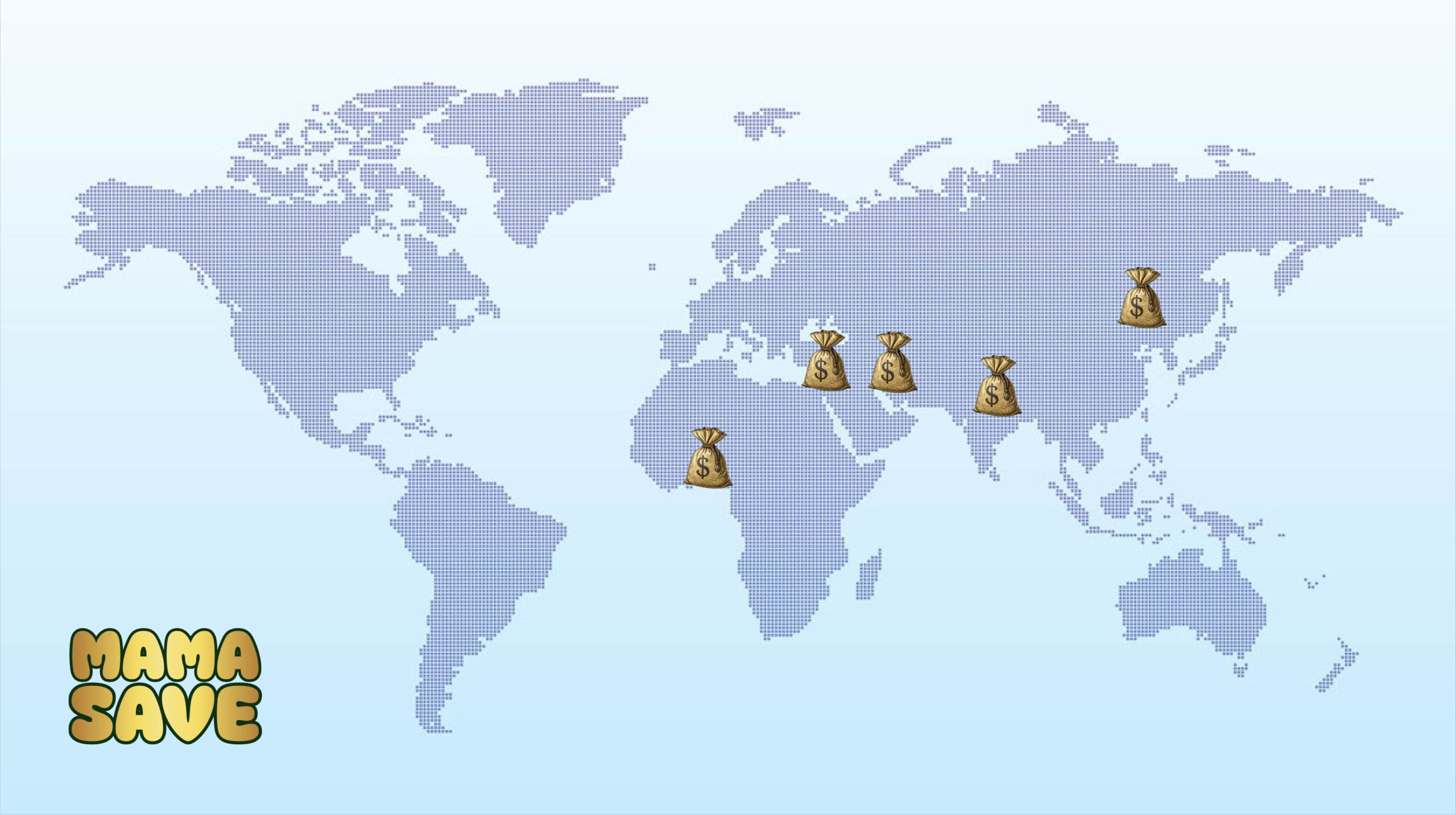
In almost every major global economy, specific communities dominate trade, real estate, manufacturing, and high-stakes commerce. People often attribute their legendary success to “luck,” “secret networks,” or superior business acumen.
But if you look past the surface, you find a much simpler, undeniable truth: Their wealth wasn’t built on how much money they made. It was built on how their culture saved, pooled, and multiplied capital.
From the bustling street markets of West Africa to the global trading hubs of Asia and the Middle East, these five legendary ethnic and cultural groups mastered the art of community-backed capital—and their playbook holds the ultimate secret to building generational wealth today.
1. The Igbo of Nigeria: The Champions of “Igba Boi” & Akawo
Known across Africa as relentless builders and natural-born traders, the Igbo people of Southeastern Nigeria operate one of the most successful informal business incubators in human history: the Igba Boi (Apprenticeship) System combined with Akawo.
Long before commercial banks established branches in West Africa, Igbo traders relied on tight-knit community contribution circles. Market traders would pool daily and weekly earnings into shared pots to help members clear shipping containers, buy out market stalls, or fund an apprentice’s graduation into a full-fledged business owner.
By practicing strict daily savings and rotating capital, they turned destroyed post-war cities into economic powerhouses. To an Igbo trader, saving isn’t about hoarding money under a mattress—it is about assembling liquidity so that when opportunity strikes, you never have to beg for a loan.
2. The Fujianese & Wenzhou of China: The “Jews of the East” & The Hui Syndicate
If you step into a Chinese restaurant in New York, a wholesale textile hub in Europe, or a manufacturing plant in South America, chances are high that the owner comes from Chinas Wenzhou or Fujian Province.
Often dubbed the “Jews of the East,” these communities are famous for leaving their home villages with almost nothing and building international business empires within a decade. How? Through a centuries-old rotating credit association known as Biao Hui (标会).
When a Wenzhou entrepreneur wants to open a business, they don’t apply for a bank loan with high interest rates. Instead, 20 to 30 family members and trusted regional peers form a rotating savings pool. Every month, everyone contributes a fixed amount, and one member takes the total lump sum to fund their expansion.
By taking turns and backing each other’s discipline, they turned small provincial towns into global commercial hubs.
3. The Jews: The Architects of Capital Protection & Community Escrow
For centuries, Jewish communities across Europe and the Middle East faced intense geopolitical instability. Because they were frequently displaced, physical assets like land could be seized at any moment.
To survive and thrive, they developed a profound financial philosophy centred on two things: mobile skills and unbreakable community credit networks.
In Jewish commercial culture, money is viewed as a tool for collective resilience. Communities established interest-free micro-fund pools (Gemach) funded by daily and weekly tithes and savings from members. If a community member needed capital to launch a trade or navigate a crisis, the pool provided it.
By combining individual daily discipline with institutional trust, they built global networks in banking, diamond trading, and international commerce that have endured for centuries.
4. The Marwaris & Parsis of India: The Masters of Hundi & Frugal Compounding
In India, if you talk about industrial titans, conglomerate owners, and master merchants, the Marwaris (from the desert region of Rajasthan) and the Parsis top the list. Together, despite being small percentages of the population, they have historically controlled vast portions of India’s corporate wealth.
The Marwari secret lies in their legendary practice of Minchat (extreme personal frugality coupled with aggressive business reinvestment) and their informal banking system known as Hundi.
A Marwari merchant can transfer massive sums of capital across cities based purely on trust, written ledgers, and community reputation. They believe that every rupee saved today is a soldier deployed for tomorrow’s business battle. By pooling profits back into community funds rather than spending on flashy personal luxuries early on, Marwari family businesses grew from small trading posts into multi-billion-dollar global conglomerates.
5. The Lebanese Merchants: Global Trade Fueled by Family Liquidity
Spanning West Africa, South America, and the Middle East, Lebanese merchant families are world-renowned for their ability to dominate retail, import-export, and distribution channels wherever they settle.
At the heart of Lebanese commercial success is the absolute priority placed on family liquidity pools. Rather than relying on external financial institutions, Lebanese family networks pool daily operational revenues into shared reserve accounts.
When a younger family member is ready to launch a new store or import a new line of goods, the capital is disbursed straight from the internal family pool. This allows them to move faster, negotiate bulk cash discounts with manufacturers, and undercut competitors who are weighed down by heavy commercial bank interest.
The Common Thread: The 3 Rules of World-Class Wealth
When you study these legendary groups side by side, you realize their success wasn’t an accident of history. They all lived by three unbreakable rules:
-
Daily Discipline Over Big Drops: Wealth isn’t created by waiting for a massive windfall; it is built by setting aside small, consistent amounts every single day.
-
Community Escrow Beats Solitary Banking: A single person saving alone is easily tempted to spend. A community saving together creates discipline, accountability, and massive pooled buying power.
-
No Stories, Just Payouts: They favoured transparent, zero-nonsense rules over complicated financial promises. Everyone knew when they paid, when they collected, and how the pool was guarded.
The Takeaway: It’s Time to Modernize the Playbook
You don’t need to be born into a global trading dynasty to build wealth like one. The exact same principles that powered the Igbo Akawo, the Chinese Hui, and the Marwari Hundi are available to you today.
For generations, our ancestors used these exact methods to build market dominance—but paper cards get lost, informal collectors default, and organizer games ruin trust.
That is why we built MamaSave.
MamaSave takes these ancient, time-tested wealth strategies and grounds them in modern security. By combining daily savings discipline and bank-backed escrow protection, we’ve made sure that the rules can never be broken.
When you lock in a daily habit or run a turn-by-turn contribution circle on MamaSave, you aren’t just saving money—you are stepping into an ancient, proven culture of financial dominance.
Small daily contributions. Zero stories. Massive collective momentum.
That is how the richest tribes on Earth built their empires—and that is how you build yours.
Ready to Build Your Empire?
Don’t let your hard-earned income sit idle or slip away through impulse spending. Take control of your daily financial discipline today.
-
Start a Daily Savings Cycle: Save as little as ₦1,000/day and collect your lump sum when you need it.
-
Launch a Turn-by-Turn Group: Bring your Esusu group online with zero favoritism and total escrow safety.
Create Your First Cycle on MamaSave Now
No stories, just savings.